Helpful Tips
Useful Tips » Baggage Restrictions
Baggage limitations and restrictions
General considerations
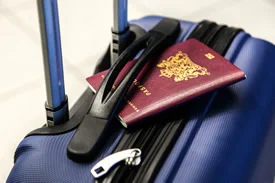
Passengers must check their baggage at the counter assigned to the airline, where the boarding pass and baggage claim tag are issued. In some airports, backpacks or items with multiple straps may need to be checked at a specific counter to facilitate handling on conveyor belts.
For security reasons, passengers must never accept, carry, or check baggage belonging to unknown persons, even if politely requested to do so.
If traveling with carry-on baggage only, many airlines allow online check-in and direct access to security controls.
Many airports also provide self-service check-in machines to print boarding passes.
Health and security requirements may vary depending on the country or airport.
Passengers are advised to check current requirements before traveling.
Checked baggage allowance
Each airline defines its own policies regarding baggage weight and number of pieces.
Allowances depend on the airline, fare type (basic, economy, business), and destination.
As a general reference, allowances usually range between 1 and 2 pieces weighing 20 kg to 30 kg each.
On basic or economy fares, checked baggage is often charged as an additional service.
Low-cost airlines typically do not include checked baggage in the base fare.
Excess baggage
If baggage exceeds the airline’s established limits, it may still be checked by paying the applicable excess baggage fee.
Since these charges are applied at the time of weighing, passengers should ensure they have an accepted method of payment available.

Carry-on baggage
In addition to checked baggage, passengers are allowed to carry hand luggage, subject to weight and size limits. Generally, carry-on limits range between 8 and 10 kg, with approximate dimensions of 55 x 40 x 20 cm, although these limits may vary depending on the airline and fare.
Many airlines allow an additional small personal item, such as a backpack or handbag, which must fit under the seat in front. On basic fares, especially with low-cost airlines, standard carry-on baggage may require an additional fee.
Some airports use physical baggage sizers and automated systems to verify carry-on size and weight, reducing tolerance for oversized or overweight items.
Limitations and liability exclusions
Airlines may refuse to transport certain items due to their size, shape, weight, or characteristics.
For safety reasons, passengers are advised not to include fragile, perishable, or valuable items,
such as money, jewelry, electronic devices, medication, documents, or keys, in checked baggage.
Some airlines do not assume liability for loss or damage to these items.
Prohibited items in carry-on baggage
For security reasons, certain items are prohibited in the aircraft cabin, including weapons,
sharp or blunt objects, explosive or flammable materials, and toxic or chemical substances.
Liquids, aerosols, and gels must comply with standard security restrictions,
generally limited to containers of up to 100 ml, except for specific exceptions applied at some airports using advanced screening technology.
Solid food items are generally permitted through security screening,
while liquid, spreadable, or semi-liquid foods are treated as liquids.
After passing security, passengers may purchase food and beverages in duty-free or commercial areas.
Some countries restrict the entry of fresh food items, even if purchased after security screening.
Passengers transporting firearms must obtain prior authorization
and report to the firearms office at the departure airport.
Firearms and ammunition must be properly packed and will be returned at designated offices at the arrival airport.
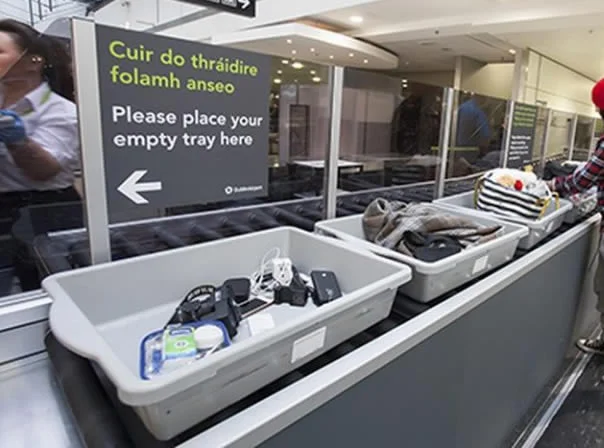
At security checkpoints, passengers may be required to remove electronic devices such as laptops or tablets
from carry-on baggage for separate screening.
At airports equipped with CT scanners, this procedure may not be required, although it is not applied universally.
During the flight, certain electronic devices must be used in airplane mode,
particularly during takeoff and landing, following crew instructions.
Pets and domestic animals
When traveling with pets or domestic animals, passengers must consult the airline in advance
regarding requirements, documentation, carrier specifications, and availability,
as conditions vary depending on the destination.
Baggage incidents
The airline is responsible for loss, damage, or destruction of checked baggage
when the incident occurs while the baggage is under the airline’s custody.
However, the airline is not liable when damage results from defects inherent to the baggage itself.
With low-cost airlines, baggage insurance is often offered as an optional paid service.
Airlines may also be responsible for damage caused by delayed baggage delivery,
unless they can prove that all reasonable measures were taken to avoid the damage.
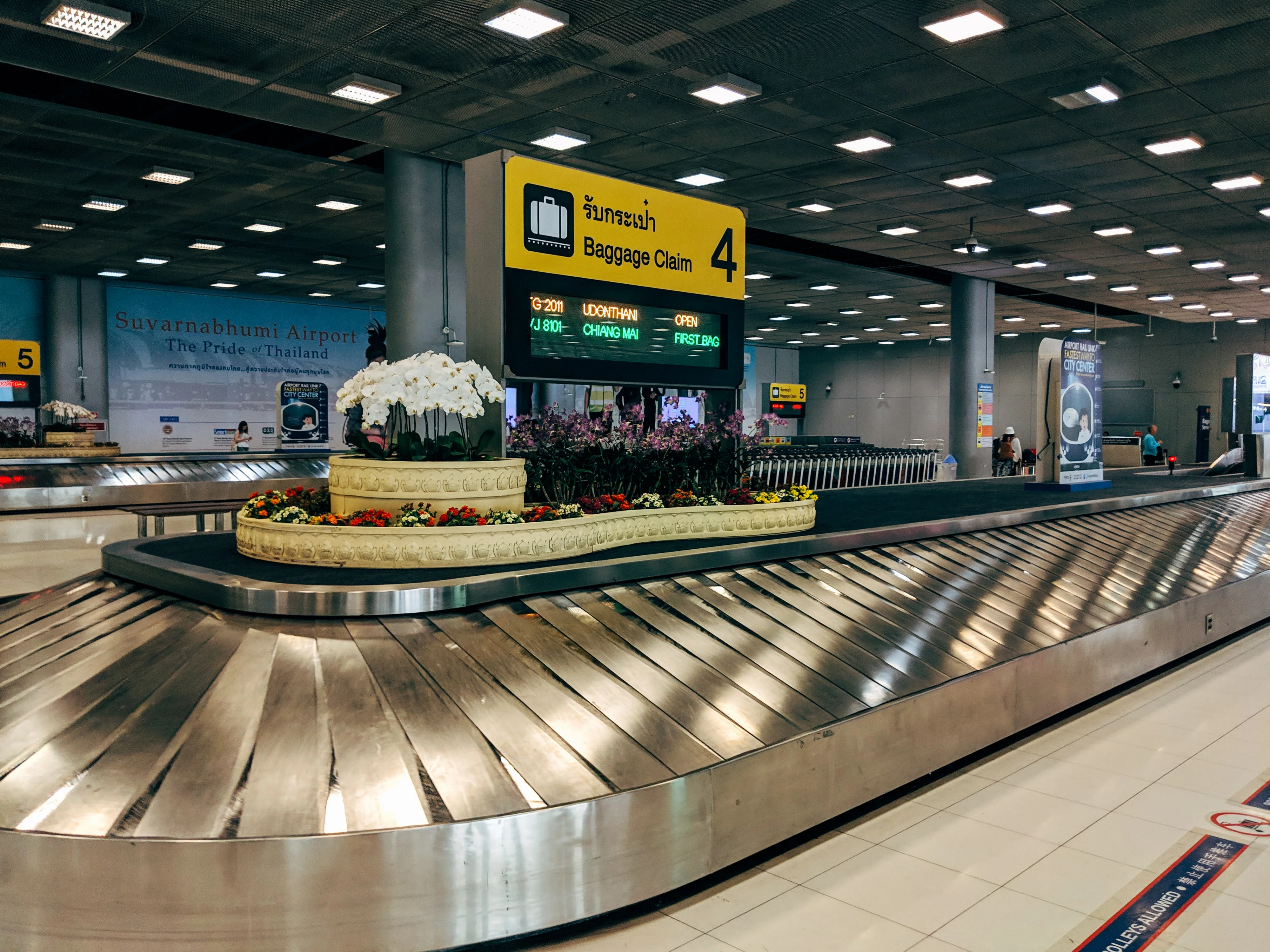
In the event of baggage loss, damage, or delay, passengers should file a claim immediately
before leaving the airport.
It is recommended to carry a change of clothes in carry-on baggage
and to consider purchasing travel insurance that covers baggage incidents.
Booking accommodation
Get your Priority Lounge pass
